
After a break of four years, the webinar series of the Resilience Engineering Association return this Thursday, December 18th, 2025! Three of Cognitive Systems Engineering Laboratory’s esteemed alumni Kati Walker, Marisa Bigelow, and Leia Lyden, Cognitive Systems Engineers at Mile Two, will present on two topics addressing effective human-machine teaming and decision-making from a Resilience Engineering lens. Each session will be 15 minutes followed by an opportunity to ask questions and discuss the implications.
Thursday December 18 | 14:00–15:00 CET / 08:00–09:00 EDT (US)
Zoom Registration Link: https://osu.zoom.us/webinar/register/WN_jLiDGDagQLGiEy8hgDh5nQ#/registration
Presentations:
Hardening Human-Machine Teams Against Misinformation & Manipulation
Katherine Walker
As the use of Large Language Models (LLMs) rapidly expands, the ways that humans are influenced by their answers is not yet clear. What happens to users who are exposed to LLM-based misinformation – such as hallucinations, biased answers, or even deliberate poisoning? Viewing the technology through this lens is critical because regardless of the efficacy (or lack thereof) of the “machine” in our Human-Machine Teams, the human member will ultimately be held accountable for actions taken. Whether users are in the loop, where they have some insight into and control over the LLM behavior, or out of the loop and must respond to autonomous LLM actions, it is critical that operators are equipped with the knowledge and techniques to recognize and mitigate effects of misinformation. Resilience engineering provides an important perspective to critically evaluate this technology and its impacts on system performance for frontline operators relying on potentially misleading and dangerous information.
Anticipatory Air Refueling
Marisa Bigelow
Background: Mile Two is a medium-size federal contractor specializing in human-centered designed software primarily for the US government to address needs in autonomous system integration, digital transformations, and platform engineering.
Practical problem: The US Air Force is interested in giving receiver pilots more situational awareness and initiative to adapt refueling schedules with tankers in real-time by aiding their decision making with an autonomous planner. We chose RE as a lens for the problem to build into the design the ability to look ahead and anticipate future bottlenecks for the individual and global goals for the pilots.
Approach: We implemented the principles of anticipatory lookahead into the design of the pilots’ Human Machine Interface to give them proactive warning of their fuel state at key junctions. In addition, multiple viable contingency Courses of Action (COA) are presented alongside the primary COA or their plan to refuel with an available tanker generated by the planner. We gathered feedback from pilots using Knowledge Elicitations, several surveys, user engagement data, and Cued Retrospective Debriefs after staged world flight tests with the Operator Performance Laboratory associated with the University of Iowa.
Results: Pilots recognized the value of the information display and gave positive ratings for the System Usability Score. They had mixed feedback on the transparency of the planner system based on the Trust of Automated Systems scale, which is a helpful baseline for future iterations. We gained insights into modifying the displayed parameters to highlight contextually relevant information (i.e. estimated ‘playtime’ left, rather than just scheduled time; rationale behind inadequate COAs; etc.).
Take away: Future iterations and testing will implement the feedback gained from the receiver pilots. Data limitations were initially limiting the implemented designs, but the envisioned scenarios provided evidence for advocating and broadening the application space. We plan to include additional means to reduce pilot cognitive burden and increase autonomous planner transparency for greater anticipatory lookahead with dynamic refueling.
The respective papers can be downloaded here.
Presenter bios:
Kati Walker
Kati Walker graduated from Ohio State University focusing on resilience engineering and accident analysis. She has worked for five years in a Cognitive Systems Engineering role in
fields such as Human-AI Teaming and autonomous vehicle control.
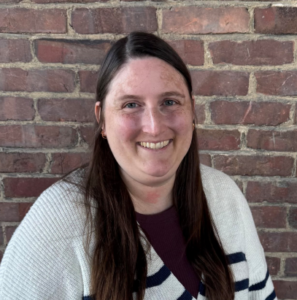
Marisa Bigelow
Marisa Bigelow leads multi-disciplinary teams as a Senior Cognitive Systems Engineer specializing in Resilience Engineering. She has presented internationally on distributed
incident response in DevOps teams. Marisa has over seven years experience designing decision-support aids for human-machine teams in various domains, including defence
intelligence, medical, and autonomous aircraft systems.

Leia Lyden
Leia Lyden graduated from The Ohio State University with a masters in Industrial and Systems Engineering with a focus in Cognitive Systems Engineering (CSE). She has worked for over 4 years as a CSE to help design decision-support aids for human-machine teams and data gathering platforms in domains such as the medical field, research labs, and defense intelligence.
—
The REA is a global community of practice that brings together people advancing research and practical applications of resilience in complex systems. Our events connect participants across domains such as healthcare, critical infrastructure, energy, digital services, transportation, automation, emergency response, finance, and aerospace. Our webinar series covers theory, practice, real cases, and current research in Resilience Engineering. The sessions aim to support both newcomers and experienced practitioners and researchers by focusing on the practical application of resilience engineering ideas. Check the REA website for upcoming sessions.